Why We Are Fighting Back Against Methodist: The Question Every Family Should Ask Before It’s Too Late
Most people assume the medical system works the way it claims to.
You show up. You trust the professionals. You follow their instructions.
And if something goes wrong, you assume the truth will be explained honestly.
Our family believed all of that, right up until the moment it nearly cost our son his life.
What do you do when the place you trusted for help becomes the reason your child ends up in septic shock?
What do you do when the failures are documented, but the institution refuses to acknowledge them?
And what do you do when the system designed to protect patients suddenly starts protecting itself?
Those questions have shaped our last two years. They are the reason we are still standing here, still pushing, still demanding answers.
Why We Are Fighting Back
Some families choose their battles. Others are dragged into them. We are the second kind.
We walked into an ER seeking help for our 11-year-old son. We trusted Methodist. We trusted the process. We expected competent care, basic medical judgment, and transparency. Instead, Nicholas was discharged without stabilization, without a sepsis workup, without antibiotics, without repeat vitals, without any explanation about his abnormal labs, abnormal blood pressure, or abnormal EKG.
Most importantly, none of the abnormal findings were disclosed to us.
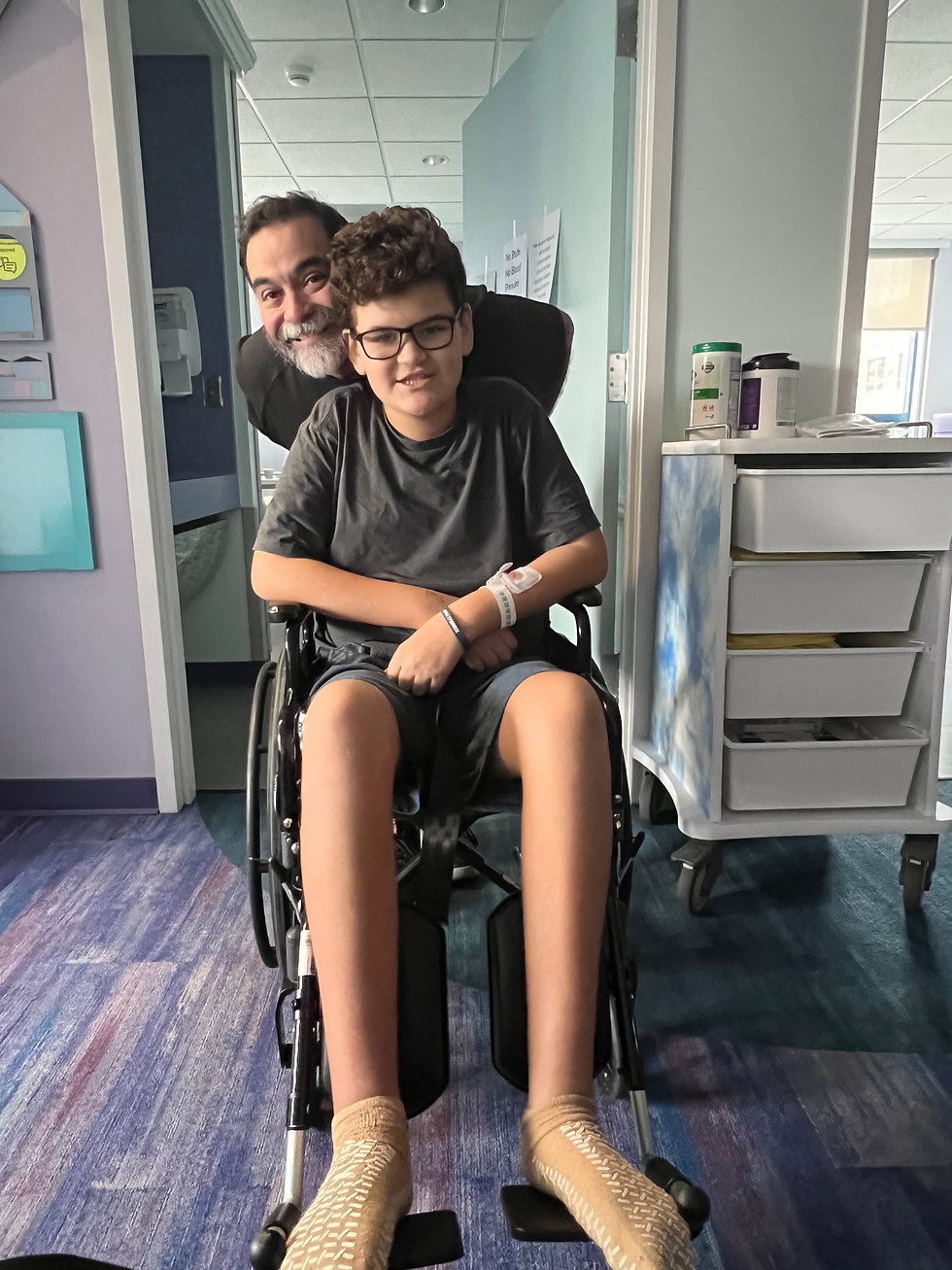
Two days later, he was in the pediatric ICU in septic shock. Vasopressors. Emergency antibiotics. Multiple surgeries. Nearly five weeks in the hospital. These are not interpretations; they are documented facts in his Cook Children’s records, which clearly state septic shock caused by Group A Streptococcus with acute organ dysfunction.
And yet, despite the severity, despite federally confirmed failures, despite a paper trail, our requests for clarity have been met with silence, obstruction, and repeated refusals to turn over basic records explaining what happened and why.
So no, we are not fighting because we want a fight.
We are fighting because the alternative is pretending this is acceptable.
Accountability Should Not Be This Hard
Let us be direct: it should not require a family to become investigators, archivists, researchers, and legal strategists just to understand how their child ended up in an ICU.
But when a hospital…
refuses to turn over its sepsis protocols during discovery,
responds to documented failures with silence instead of transparency,
publicly markets a spotless safety record while withholding internal data,
…it becomes painfully clear that the problem is not only what happened to our son.
The problem is also the way the institution responded to it.
And if families do not push back, nothing changes.
This Fight Is Bigger Than Us
People like to tell us to “move on.” They say dwelling does not help.
But pretending this did not happen does nothing to protect the next child.
Sepsis is one of the leading causes of preventable pediatric death.
Protocols exist for a reason.
Standards exist for a reason.
When an ER ignores textbook warning signs, tachycardia, hypotension, abnormal labs, abnormal EKG, recent infection, persistent vomiting, and sends a child home without following sepsis evaluation guidelines, that is not a gray area. It is a preventable failure with consequences that played out across 34 days of ICU and inpatient care: multifocal myositis, DIC, septic arthritis, repeated surgeries, and long-term complications.
This is not about punishment.
It is about prevention.
We Are Not Asking for Special Treatment. Just the Truth
Hospitals love to talk about transparency and patient-first values. But those words often disappear the moment something goes wrong.
We asked basic questions:
What happened?
Who made these decisions?
Why were protocols not followed?
What safeguards failed?
What will be changed so this never happens again?
Instead of answers, we received delays, denials, missing documents, and no explanations.
If a hospital is confident it did everything right, transparency should not feel threatening.
We Fight Because We Refuse to Normalize This
If this can happen to us, parents who asked questions, returned for care, and followed instructions, it can happen to anyone.
This fight is not fueled by anger.
It is fueled by responsibility.
By the obligation to ensure that other families do not face the same wall of silence, mixed messages, and preventable harm.
Our son almost died.
Critical steps were skipped.
The records prove it.
We are not going away quietly, because quiet does not fix systems.
Quiet protects them.
This Fight Ends When the Truth Is Acknowledged
We will continue pushing for answers, for accountability, and for change.
Not because we enjoy conflict.
Because our son deserved better.
Because the next child deserves better.
Because families should not have to fight this hard to learn the truth.
The Question Every Parent Should Ask
Before your child ever steps foot into an ER, ask yourself:
If something went wrong, would this hospital tell me the truth, or would it tell me a story that protects itself?
Most families never think to ask that question.
We did not either.
Now we know exactly why we should have.


Comments